Wednesday, February 25, 2009

Angle of Repose, Pt. 2


I just finished the novel from my previous post, Angle of Repose. This is a sort of historic novel that chronicles the marriage of Oliver and Susan Ward. It is sort of historic because it is directly based on the letters of Mary Hallock Foote, the wife of engineer Arthur De Wint Foote (designer of the Arrow Rock Damn and Boise's irrigation system), but the author narrates from the prospective of their grandson and takes enough liberties with the story to make it a clear work of fiction. Apparently there is controversy surrounding the book because Stegner used direct quotes from the letters of Mrs. Foote, but did not credit where he used those quotations. The story chronicles about 30 years of the couple's marriage. The couple were Eastern Americans that moved into the Western frontier in order to establish Oliver as an engineer, but ended up staying in the West. Oliver became a regular frontier man while Susan reject the rough Western culture by attempting to retain her status as a lady of gentility.

It is frequently noted throughout the novel that it is not about the couple's children, the west, engineering or the narrator (who constantly interjects into the novel facts about his own life), but it also can't help but be about all those things. The novel obviously makes connections between the marriage of the Wards and all the previously mentioned things that the book is not about, when in fact it is about all those things and much more. The story of the Wards marriage is written with the underlying hint that all the world is constantly a repetition of the past. We will all make the same mistakes as our parents, grandparents, and neighbors while our children can't help but follow in our footsteps. The end of the novel does not leave out hope for humanity to change it's ways, but it doesn't tell us if the change we hope for happens or not.

I enjoyed the beginnings of Oliver and Susan Ward's relationship and was looking forward to seeing them prosper into a Victorian family to look up to as role models, but as the book went by and the title Angle of Repose became more clear I realized that this story is much more realistic than I had wanted it to be. I wished for a happy ending and was given something else. Not an unhappy ending, but something other than a joyful conclusion.

The story had so much to say about the Frontier culture, the Victorian American culture, and current culture that it is hard to write about each theme of the novel without writing about the next so I will try to keep this theme analysis short. It seemed to me that one fo the major themes I thought about while reading this book was the dependence the Victorian lady had from her husband. The dependence was accepted as necessary to both Oliver and Susan, but was obviously trying to their relationship. After many failures in Oliver's career, Susan began to resent him for not giving her the life a true noblewoman deserves, the fact that she depended so much on him for her happiness and well being was sickening to read at times and was possibly the reason I had times where I struggled to read at a good pace. Susan was not without her talents, she was an illustrator and published author that was able to support the family while her husband was out of work or foregoing a paycheck, but having to use her own skills and money to support the family caused an obvious resentment between the couple. This to me is a very common thing that can still cause major problems in relationships today. Marriage is still not always seen as an equal partnership. It is commonly seen as an extended fatherhood or a way for a woman to survive in the world. If the husband is not offering a livable salary and the wife has to work it is commonly viewed as unideal. The husband is usually still seen as the provider and protector, while the wife is the helpless caretaker that can offer great things to the family, but not to the world at large. I feel a sadness that this is still commonly part of marriages in our modern times because it devalues both the male and the female involved in the relationship and puts unwanted expectations on both husband and wife. Perhaps someday we could get over this view of marriage, but I don't know if I will ever see the day.

To conclude, I thought this was a great novel. It gave me much to think about and analyze while being written with an entertaining voice. I could probably write a much longer analysis of the novel if I wanted to, so perhaps we will see a part three to this post.

P.S. I want to look like Wallace Stegner when I am his age. (or right now).

Monday, February 23, 2009

Angle of Repose Pt. 1

I am currently through a little over half of this large novel. It will probably be the longest novel I have ever read at only 569 pages. I suppose I have read a few books that are in the 400 page realm, but finishing this will truly feel like an accomplishment. The novel is a historical story of an engineer and his genteel wife living in the western United States in the late 1800's. This is the second novel I have read this month with a hefty amount about romantic relationships. Also the second novel with a female heroin, coincidence? I am not sure. I didn't know that either book would be either romantic or have a female main character, so it must be coincidence. I don't have too much to say about the book at this moment. I just wanted to write a little bit because it has been so long since I have finished a book and written a reflection on it.

It has been a strange read for me, because it has been at times both addicting and hard to get into. I am not sure why that is, but something about Stegner's prose makes me love reading as well as eagerly await completion so I don't have to read any longer. I think it might just be a case of wild mood swings or something, but usually I can either read a book nonstop forever or barely get through one. This one I can either barely get through or read nonstop. I am just as confused about it as this paragraph is confusing.

Anyhow, full analysis of Angle of Repose coming soon....

Wednesday, February 11, 2009

Seize The Day


Seize the Day is possibly the most depressing book I have ever read. I would place it in the same category as The Jungle by Upton Sinclair. It is the story of a middle aged man who has failed at everything he has tried. He was a failed actor, a failed husband, a failed salesman, and a failure in his father's eyes. The story follows him as he spends the last of his money gambling on the stock market with a untrusted "expert" trader. As you read through this story you find that he is looking for something that no one has given him, and that is love and kindness. Each character he encounters or reminisces about wants something from him he cannot offer or wishes him harm. The story is focused on themes of loneliness and despair as you see Wilhelm (the main character) at his last straw and beyond. The story ends with just as much depression as it had in the beginning.

I didn't have much thought or emotion while reading this book, and I don't know if I would recommend it to anybody unless they first showed interest in it. Although it was well written, I was constantly reading with the feeling that I couldn't wait for it to be over. I may have learned somethings from it, but I will have to think about it for a while before I could easily share what those things may be.

Monday, February 9, 2009

"The Greatest Man in the World"


I just finished reading "The Greatest Man in the World" a short story by James Thurber. I don't know much about the guy, but I think I might try to learn more about him soon. Apparently from the brief biography the preceded this story he had a penchant for comedic writings, and this short story certainly gave me plenty of laughs. It is the story of a man who flew all the way around the world without stopping once (in the era of Lindbergh when this was considered a feat). After this daring adventure he was heralded as a hero, but to the surprise to the press and politicians of his day he had few heroic qualities about him. He was rude, a former criminal, a womanizer, greedy, disrespectful to authority, and just a bad sport overall. He disrespected all pilots who had flown before him and ridiculed two Frenchmen who had recently died attempting to cross the Atlantic by plane. The press decided to hide him from the public and continue championing him as the greatest man in the world while he recovered from the physical beating he got from the two weeks in the air without sleep. When he was ready for the public, he first had a party thrown for him in a highrise in New York. After disrespecting the whole of the party and failing to recognize the President of the United States, he went to the window to shout out his greatness to the world. Sadly, one of the party's patrons decided (with the President's inaudible permission) to push the man out of the window, thus ending the question of how to maintain his hero status. The funeral was lavish and the "hero" (who was disliked by most in his hometown and by his family) was celebrated and mourned by the public.

The story was written in a very comic and fun way. Usually the role of the press or politicians is of the villian in literature, but in this case they were merely disguising the truth to protect the public from this brash personality. In the end, I was dissappointed that the world didn't get to see their "hero" for what he was. I wanted the lie to be exposed so that all could know that great achievement isn't always the result of great character, but I suppose this ending was more realistic for the setting. The heroes of the early 1900's could never do wrong. Whether it be the American soldiers in the World Wars or the view of the "perfect" family that existed in that time. Americans tended to hide their bad sides and always praise those who succeeded. I guess my hope is that those who read this story now will realize that we all have a little bit of "The Greatest Man in the World" in them, and that we all shouldn't necessarily be pushed out of the window because of it.

Saturday, February 7, 2009

Still Life with Woodpecker

Today I finished Still Life with Woodpecker by Tom Robbins. It was my first time reading a story by the infamous Mr. Robbins and I enjoyed the experience. His narrative voice was fun and playful, but his topics were thought provoking and meaningful. Still Life with Woodpecker is a modern fairytale. It is a romance between two redheads who believe their flaming hair is not just a genetic trait; it is an entitlement to a lifestyle beyond social norms. Woodpecker is an anarchist outlaw, constantly establishing himself as more than just a criminal with a cause or a social disease. His reason for disobeying the rules and laws of society has no purpose or goal. His reason for being criminal is to cause general unrest among communities and most of all: to spend the life he has doing what he pleases. Throughout the fairy-tale, Woodpecker does not change. He is constant, never without his matches and dynamite (except a few instances out of his control). Princess Leigh-Cheri is a political exile from the country of Mu. She is an evolving character that begins the fairy-tale as a celibate environmentalist, but goes through enough worldview changes to fill this blog. The most enduring of her character traits is her undying crush on none other than Mr. Ralph Nader, hero to the progressive world. Her attic decor includes numerous posters of the left's righteous poster boy. The story weaves these two characters together in an unexpected knit of romance and adventure. I am not commonly inspired into feeling romantic by stories of this nature (if anything philosophy brings out the romance for me), but Woodpecker and the Princess certainly have made me feel closer to my partner in crime. Sure, the love scenes were awkward and overly detailed, but they didn't leave me with the usual disgusted voyeuristic feeling that Palahniuk and Vonnegut constantly drop on me unexpectedly. The scenes were unclassy (and did I mention awkward), but within them Robbins made sure to know that it was all rooted in a form of true love (even though Woodpecker would scoff to know that I described it that way.) I'm not going to get all deep and technical like I have in past book reflections, but I will say that Robbins did a good job expressing and encouraging a feeling of love for his readers.

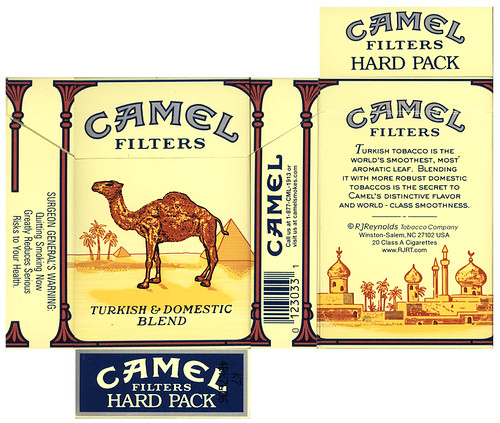
Oh yeah. He also created a love inside me for the original packaging of Camel ciggarettes. I even went out and bought a pack. Too bad I was a year late, they dramatically changed the pack design for the first time in years in 2008. Ah well, I guess that keeps me from wanting to purchase multiple packs.

Thursday, February 5, 2009

Happy Birthday, Wanda June!


Earlier this week myself and a group of my friends sat down together with glasses of wine and read a play aloud. We decided who would get which parts by drawing character names from a hat. We decided (actually it was just my decision, I never though to ask anyone else) that we would read "Happy Birthday, Wanda June!", a play written by Kurt Vonnegut Jr. I will write about what I thought of the play in a moment, but I did want to say that I think this is the nerdiest thing I have done in many many years (if not the nerdiest think I have done in my entire life). But despite the embarrassment that we could have had, we all did it without being ashamed. I believe it was just planned so fast that we didn't have time to think about what our highschool aged selves would have thought about our actions, and that was a good thing.

"Happy Birthday, Wanda June!" was a play that was supposed to be a modern retelling of the return of Odysseus from his long journey to find his son miserable and his wife being courted by numerous men. But it would misleading if I did not say that the play was nothing like the story told in the Odyssey (as pointed out numerous times by Shaun King). That didn't bother me too much because I wasn't expecting it to be anything predictable. I don't think I have ever ready anything by Kurt Vonnegut that was expected. I think one of the few similarities between the ancient story and the modern play was that each character was a in the same situation as their counterpart. Odysseus and Harold were both returning from a long adventure that was supposed to have taken their lives. Penelope and modern Penelope are both being pursued by suitors and about to decide which will be her new husband. Telemachus and Paul are both unhappy with the suitors and the replacement of their father figure. Even the personalities of the characters are similar, but Vonnegut definitely gives them more consistent character flaws and realistic responses to circumstance (Harold is violent like Odysseus, but his violent nature isn't celebrated or exaggerated as heroism; Penelope has emotional issues with the return of Harold). Despite those few similarities, the two stories are barely recognizable as related.

Throughout the story Vonnegut explores how different philosophies interact with another. There are many different places to find the characters arguing about feminism vs. traditional chauvinism and subtle things of that nature, but the biggest philosophical argument in the story is pacifism vs. violence. One of the suitors is a doctor and pacifist while Harold is a violent man who takes what he wants and has killed or will kill to survive. I probably wouldn't have noticed this if it weren't for the intro from Vonnegut, but in the end the moral was that both men have correct philosophies. Vonnegut had written in his introduction that he wanted to write a play where every character thought they were right all the time and actually were right all the time even though they conflicted with one another. Harold is correct that the way he lives his life gives him great happiness and power, but Woodly (the Pacifist) is also correct that his way of life is better for humanity. Their final argument is the climax of the play and the way it ends is that both men are a joke in themselves. Harold is a joke because he hates himself for not dying because he views death as the greatest honor for a man of violence, and Woodly is a joke because his pacifism is a reflection of his cowardice. I am not sure if I know for sure that this was a theme of the play, but it is not uncomm0n for Kurt Vonnegut's message to be that we are all living within the context of a big cruel joke. We are all inconsistent and compromise our values without remorse. We all know that who we are and what we stand for is just a reflection of our fears and weaknesses. What we value is what we think will keep us alive longest, not what truly has value. I do not necessarily agree with Vonnegut's moral, that we are all living a lie, but I do think the picture he paints of humanity is a valid portrait of our nature. We can all be violent pacifists, and chauvenist feminists, and Christian Nihilists, and..........

Thursday, January 15, 2009

The Wire


As all of my friends and family know, I am a big fan of a certain crime drama that was on HBO from 2002 to 2008. I finished the final season today and have officially seen the show in it's entirety. I can honestly say that I believe it is one of the most interesting and educational shows I have seen in my entire life. Although it did have a lot of the commonly found faults of T.V. script writing (lousy one liners, sometimes unbelievable plot twists), the show was a very real and believable story about the nature of perceived good vs. evil. The show also depicts American city workings, government and communities in a very unflattering way, but continues to show the good with the bad. Although one gets the sense that things are broken in our society, hope for the better is always dangled within reach. This is the realism that is so intense in The Wire, there is evil and good in each character and decision that is made. This was a very quick way to sum up the show and doesn't really give it justice, but whatever... I am not writing this to recommend The Wire, just to express what I got from watching the show.

I am always intrigued with the duality of human nature and the Wire gave me plenty to think about regarding this dynamic of humanity. All of us are flawed, but it seems to me that we all want what is considered good in our own realities.

Take how humans view wealth for example. Some people believe that security and prosperity are good and strive to get these things for themselves and their family while hoping others can also be secure and prosperous. Although they care for others, they would rather see a less fortunate person find their own prosperity instead of donating their money. They wouldn't see a handout helping anyone learn to be prosperous (or good), they would rather teach them to fish(or to the extremist it would be better for nature to force them to learn to fish for survival). To be good is to be an example to others how to be self-sufficient, to be bad would be to accept handouts and not work for what you receive. Being charitable isn't good and accepting charity is worse.

Some people believe the opposite and view money and power as bad things. They see greed and selfishness as the only way to become prosperous. To be good in their eyes one is to give and receive freely without hoarding or worrying about your own personal security. To be evil would be to see someone suffering and not immediately attempt to resolve what is tormenting them by giving time, resources or money. Goodness could be defined by being completely selfless and avoiding wealth and power.

Still other people may be in the middle and believe prosperity exists outside of morality. Morality is only measured when you decide what to do with your money/influence/etc. If you can evenly distribute your time and resources between security and charity then you are making moral decisions. If you hoard your resources and give nothing to those in need you are being immoral, but also if you give irresponsibly and don't take care of yourself and your family you are being equally immoral. Being balanced is good, being imbalanced is bad.

All three of these ideas define the other's view on prosperity as a bad way to think. People of each mindset act differently, but each one considers itself good. I can say that I understand each one of these philosophies, but I cannot say which one is "good" when it comes down to it. The gray option is almost always the safest bet, but I don't know if being perfectly balanced is ever a sustaining position. We all tip one way or another. Even if we could achieve perfect balance or perfectly represent our philosophy on prosperity we would still doing good in our own minds and not necessarily everyone elses.

We blur the lines between good and evil simply by how we view others and by how others view us.

This is basically just a repeat of an ethics lesson I had last year, but that's why I liked the Wire. It was a T.V. show that gave me an opportunity to explore reality in a deeper way. How often does that happen?